I always try to think a little bit out of the box. A little to the left. Everyone does 4/4, 4/4." Watch Mick Mars of Mötley Crüe dive into his early inspirations, his creative process, and how he gets his signature tone with Ernie Ball strings.
String Theory
Mick Mars
Mötley Crüe
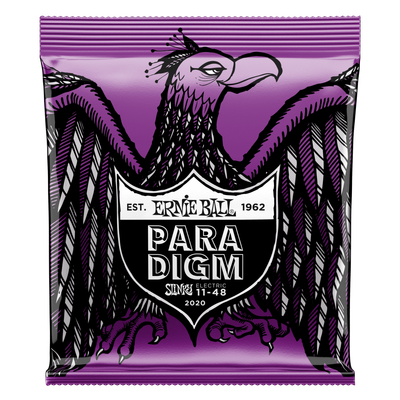
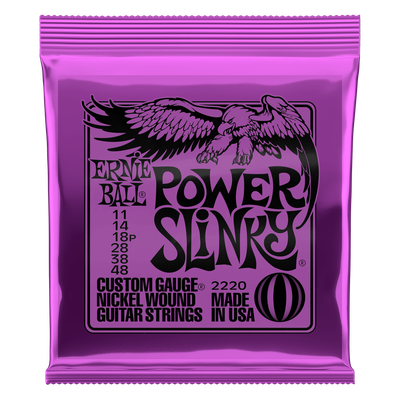
Featured Strings
Recent Episodes
All Episodes
-
Adam Granduciel - The War on Drugs
-
Albert Lee
-
Andy McKee
-
Bassel Hallak
-
Bethany Cosentino - Best Coast
-
Bobb Bruno - Best Coast
-
Butch Walker
-
Chris Broderick - Act of Defiance
-
Christian Adameit
-
Chris Vega
-
Claudio Sanchez - Coheed and Cambria
-
Clay Cook - Zac Brown Band
-
Clint Black
-
Cory Wong - Vulfpeck
-
Courtney Barnett
-
Daron Malakian - System Of A Down
-
Dave Navarro - Jane's Addiction
-
Dhani Harrison - thenewno2, Fistful of Mercy
-
Don Felder
-
Dustin Kensrue - Thrice
-
Ed Roland - Collective Soul
-
Frank Iero - My Chemical Romance
-
Hanne Kah
-
Hannes Kelch
-
Hootie & the Blowfish
-
Ilan Rubin - Nine Inch Nails, Angels & Airwaves, The New Regime
-
Jacky Bastek
-
Jade Puget - AFI
-
Jason Isbell
-
Jason Richardson
-
Jerry Cantrell - Alice in Chains
-
Jesse Hughes - Eagles of Death Metal
-
Jim Adkins - Jimmy Eat World
-
J Mascis - Dinosaur Jr.
-
Joe Bonamassa
-
Joe Don Rooney - Rascal Flatts
-
John Myung - Dream Theater
-
Johnny Marr - The Smiths
-
John Petrucci - Dream Theater
-
Josh Carter - Phantogram
-
Justin Chancellor - TOOL
-
Kai Stuffel
-
Kenny Wayne Shepherd - Kenny Wayne Shepherd Band
-
Kirk Hammett - Metallica
-
Kurt Vile
-
Laura Jane Grace - Against Me!
-
Lindsey Troy - Deap Vally
-
Lissie
-
Lzzy Hale & Joe Hottinger - Halestorm
-
Mac DeMarco
-
Mark Holcomb - Periphery
-
Mick Mars - Mötley Crüe
-
Mike Dirnt - Green Day
-
Mike Herrera - MxPx
-
Neal Schon - Journey
-
Nick Hexum and Tim Mahoney - 311
-
Orianthi
-
Paul Gilbert - Racer X, Mr. Big
-
Paul Stanley - KISS
-
Pete Wentz
-
Petey USA
-
Phil Manansala<br>& Alan Ashby - Of Mice & Men
-
Rebecca Lovell & Megan Lovell - Larkin Poe
-
Rex Brown - Pantera, Down, Kill Devil Hill
-
Richie Faulkner - Judas Priest
-
Rick Springfield
-
Robin Finck - Nine Inch Nails
-
Shaun Morgan - Seether
-
Shavo Odadjian - System Of A Down
-
Stephen Carpenter - Deftones
-
Steve Lukather - Toto
-
Steve Morse - Deep Purple
-
Steve Stevens - Billy Idol
-
Steve Vai
-
Synyster Gates<br>& Zacky Vengeance - Avenged Sevenfold
-
The White Buffalo
-
Thomas Blug
-
Tim Henson - Polyphia
-
Tim McIlrath - Rise Against
-
Tom DeLonge
-
Tom Dumont - No Doubt, Dreamcar
-
Tosin Abasi
-
Tyler Bryant
-
Walter Schreifels
-
Zac Carper - Fidlar
Transcript
Mick Mars:
I started playing guitar when I was seven years old, one of those little wind up Micky Mouse guitars. I learned how to tune it, started picking out whatever was popular at the time and at that time it was Frankie Avalon and Elvis Presley.
Mick Mars:
Probably the most influential to me was Mike Bloomfield, people like Jeff Beck and Jimmy Page and Jimi Hendrix.
Mick Mars:
Kink's changed my life, but it kind of introduced me to the raspy gnarly guitar, Dave Davies, that I'm like, "Wow, that's cool. I really like that." A different new tone.
Mick Mars:
My tone comes through many different combinations of amps, the way they're hooked up. If you could have been there, you would've seen my rack mounts, plugging them in and out to see which way it sounded the best. So this thing sounds better first, then this one, then this one, this and no, let's try this one. Ah, that sounds better. That sounds good. And just playing around with stuff forever, ever and ever. It's taken me years to get to this point of where my tone could be like a couple guitar players up there, but I'm not stopping there, of course. I still experimenting with different sounds, different tones, different tunings. Pick up an out of tune guitar and play it, play it through something you never play it through before. I'm still playing around with stuff.
Mick Mars:
I always try to think of a little bit out of the box. A little to the left. Everybody does four, four, four, four. If you listen to Beatles, they go like more of a waltzy kind of a thing, which is a three-four or six-eight and then it comes back the four-four again. That stuff is great for me to listen to. The way that I'm writing songs now, usually get like a drum beat here in my studio or whatever to just play a bunch of rips over the top. Going back listening, I go, "Okay, I like this and this, this, this." Then I'll play the higher strings for it, a certain melody.
Mick Mars:
I'm not going to reinvent music by any means, but I may be able to go, "Oh, that's a little bit different than what I'm hearing."
Mick Mars:
I started using Ernie Ball strings when I was around 14. I had borrowed first electric guitar that I was like really playing and it was a Gibson Melody Maker. I busted a string and I went down to the music store, asked for a set of guitar strings, but give me to Es. And he went, "Huh?" And I said, "Well the strings on my guitar are bendy." He go, "Oh, you want light gauge." So poof, my first pack of Ernie Balls.
Mick Mars:
I used to use 10 through 48 for quite a while and then I decided to go up to 11. I use 11 through 50. When I drop tune I use 52-54, give just the right amount of that ballsy sound.
Mick Mars:
Motley started in LA. Nikki and Tommy were already playing together and I'd put an ad in a paper. They were looking for a guitar player and they found my ad. I actually auditioned them. They don't know it. But anyway, no, we went over there and it clicked.
Mick Mars:
When I come out with my solo project, my first record bulls give me a key to that door I need to open. I'm definitely going to lose some fans because it doesn't sound like my old man. If it does well, then I know I can go another further, another further, another further and keep reinventing and I want to keep involved and to keep moving, keep that motivation going. You stop learning, might as well just put your guitar down.